
The question comes up in the first few days, sometimes the first few hours. Can a relationship survive infidelity? Is it even worth trying?
It’s one of the most loaded questions a couple can face, and one of the hardest to answer honestly, because the honest answer is: it depends. Not on whether the affair happened, or how long it went on, or even how severe it was. It depends on what both partners are willing to do next.
Many couples not only survive infidelity. They rebuild something more honest and more durable than what they had before. That outcome isn’t guaranteed, and it isn’t easy. But it is real, and it happens more often than most people expect when they’re standing in the middle of the worst of it.
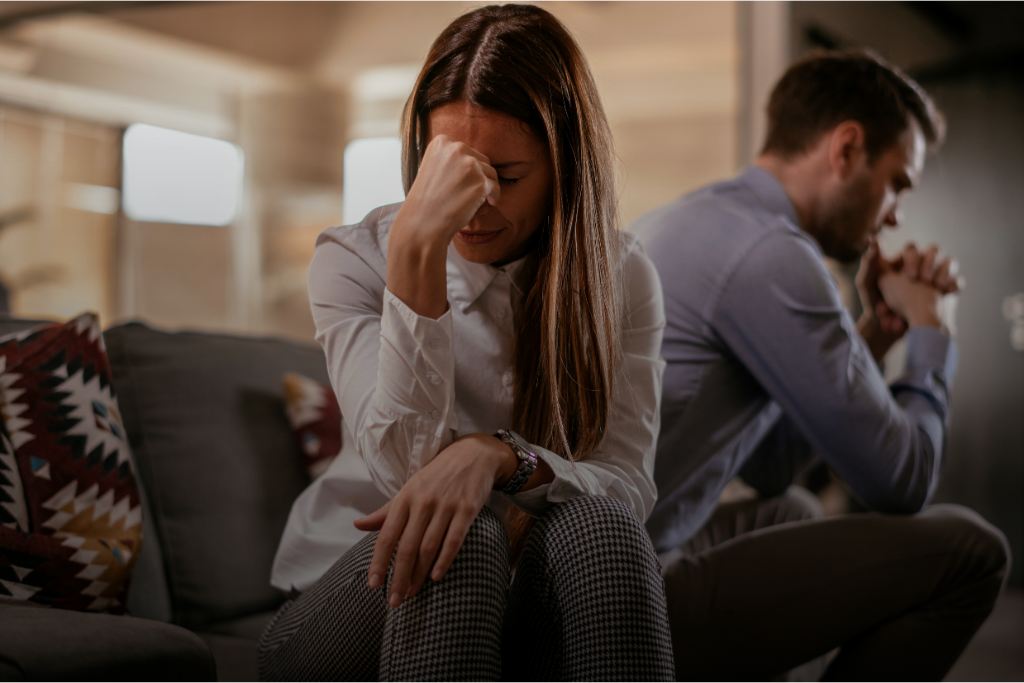
Can a Relationship Survive Infidelity? More Couples Stay Together Than You’d Think
Studies on couples who have experienced infidelity consistently find that a significant portion stay together. According to the American Association for Marriage and Family Therapy, approximately 53% of couples who experience infidelity remain together after discovery. And among those who get structured therapeutic support, outcomes are considerably better: Gottman Institute research shows that around 70% of couples who engage in affair recovery therapy move from distress to genuine recovery.
That finding surprises people. The instinct is to assume that a relationship after infidelity is always a diminished version of what it was, held together by circumstances or inertia rather than genuine connection. For some couples that’s true. But for others, the crisis becomes the thing that finally forced an honest reckoning with what wasn’t working, what had been left unsaid, and what each partner actually needed.
Outcomes are also strongly shaped by how couples respond in the aftermath, not just whether they stay together, but whether they get structured support. Couples who work with a therapist trained in affair recovery have significantly better outcomes than those who try to navigate it alone. The conversations required are too charged, too complex, and too easy to derail without someone in the room who knows how to hold them.
What Actually Makes the Difference
It’s not about the strength of the relationship before the affair. Some couples who seemed solid don’t survive it. Others who were already struggling find a way through.
The factors that tend to matter most are:
Whether the partner who had the affair takes full accountability. Not just apology, but accountability. That means answering questions honestly, tolerating the injured partner’s pain without becoming defensive, and showing through consistent behavior over time that the breach of trust is understood and taken seriously. Half-measures, defensiveness, minimizing, partial disclosures, are one of the most common reasons recovery stalls.
Whether the injured partner can eventually move toward processing rather than only punishing. This is not about forgiving quickly or pretending the hurt isn’t there. The pain is real and it takes time. But recovery requires that at some point the injured partner is able to engage with the question of what comes next, not just what happened. That shift doesn’t come from willpower. It usually comes from feeling genuinely understood.
Whether both partners are honest about what they actually want. Some people stay because they feel they should, or because of the children, or because leaving feels too frightening. That’s understandable, but it’s not a foundation for real recovery. The couples who rebuild well tend to be the ones who are honest, with themselves and with each other, about whether they actually want to try.
Recovery Is Not Going Back to How Things Were. Recovery from infidelity is not returning to how things were before. The relationship that existed before the affair was discovered is gone. That version of the relationship, built partly on an incomplete picture of what was actually happening, cannot be restored.
What is possible is building something new. That process involves grieving what was lost, understanding what contributed to the breakdown, and deciding together whether to try to create something different. It is harder than most couples expect, and it takes longer. But it is a real thing, not just a consolation prize.
It is also not linear. The common assumption is that recovery follows a clear arc: initial crisis, gradual improvement, resolution. Most couples find it doesn’t work that way. There are periods of real progress followed by setbacks that feel like going back to square one. Intrusive thoughts and emotional triggers tend to outlast the initial acute phase by months. That doesn’t mean recovery isn’t happening. It means healing from this kind of relational injury takes time in the same way that healing from any significant trauma does.
The Injured Partner Is Dealing With More Than Relationship Problems
One thing that often gets lost in the focus on the relationship is that the injured partner is dealing with something that goes beyond the relationship itself. The experience of discovering a partner’s affair can produce symptoms that look a lot like trauma: intrusive thoughts, hypervigilance, difficulty sleeping, a constant scanning for more deception. This is sometimes called betrayal trauma, and it is a real and distinct response that requires its own attention.
This matters for recovery because a partner who is in acute trauma is not in a position to do the relational repair work that recovery requires, at least not yet. The stabilization has to come first. That’s one of the reasons the early phases of couples therapy after an affair often focus less on the relationship and more on helping each partner find some ground to stand on individually.

Don’t Wait as Long as Most Couples Do
Most couples wait. They try to handle it themselves first, either because they’re not sure therapy can help, or because the idea of talking about it in front of a stranger feels impossible, or because they’re not sure they want to save the relationship and don’t want to spend money finding out.
All of those concerns are understandable. But the couples who do best tend to be the ones who get support early, before the patterns that form in the aftermath of discovery harden into something harder to shift. The conversations that happen in the first weeks and months without any structure around them often do damage that takes much longer to undo.
You also don’t need to have decided anything before you start. One of the most common misunderstandings about couples therapy after an affair is that it’s only for couples who have decided to stay together. It isn’t. Many couples come in not knowing what they want, and a good therapist doesn’t push them toward a particular outcome. The goal is clarity: understanding what happened clearly enough that whatever decision both people make is a real one.
If you’re trying to understand what therapy for this actually looks like, this post walks through it in concrete terms.

What to Expect When You First Reach Out
Many couples put off calling because they don’t know what to say or what to expect. They’re worried the therapist will take sides, or push them toward a decision they’re not ready to make, or that the first session will feel overwhelming.
In practice the first contact is much lower-key than people expect. You speak with a care coordinator, not a therapist. They’ll ask some basic questions about your situation and what you’re looking for, and they’ll match you with someone whose experience fits. There’s no commitment required and no pressure to have figured anything out first.
The first few sessions with the therapist typically focus on getting a clear picture of what each partner is experiencing, what the relationship looked like before the affair was discovered, and what both people are hoping to get from the process. The therapist isn’t there to decide whether your relationship is worth saving. That’s your decision to make, and a good therapist won’t push you either way.
What they can do is give you a structured, supported space to figure it out together, without the conversations collapsing into the same cycles that have made it impossible to get anywhere at home.
If you’re considering couples therapy, this can be a place to begin, with guidance that is thoughtful, structured, and grounded in real change.
If you’re trying to figure out what to do next, you don’t have to have it all worked out before you reach out. Our care coordinators can answer your questions and help you understand whether couples therapy is the right fit. Talk to our care team or call (650) 461-9026.

Giving the Relationship Its Best Chance
No therapist can guarantee that a relationship will survive infidelity. What therapy can do is give both partners the best possible conditions to find out.
That means a structured process that moves through clear phases, from initial stabilization through understanding what happened to active repair. It means approaches grounded in decades of research, like the Gottman Method’s three-stage affair recovery framework and Emotionally Focused Therapy’s focus on the attachment injuries beneath the surface. And it means a therapist who can hold difficult conversations without letting them collapse into the same cycles that made repair impossible at home.
Many couples come to this work skeptical. They’ve already had the same fights twenty times. They’re exhausted. One or both partners may be operating on very little hope. That’s not an unusual starting point, and it’s not a reason to conclude that therapy won’t help.
The couples who make it through are not the ones who felt certain it would work. They’re the ones who showed up anyway.
If you and your partner are facing this and trying to figure out what to do next, our couples therapists in Palo Alto, Menlo Park, and San Jose work specifically with couples navigating infidelity and affair recovery. Learn more about couples therapy at Palo Alto Therapy or call us at (650) 461-9026.
You Might Also Like to Read:
- After the Affair: What Couples Therapy Actually Looks Like
- Betrayal Trauma Is Real — And It’s Different From What You Think
- 8 Tips on How to Talk to Your Partner About Couples Therapy

Deborah specializes in Cognitive Behavioral Therapy (CBT), Exposure and Response Prevention (ERP) for obsessive-compulsive disorder (OCD), SPACE (Supportive Parenting for Anxious Childhood Emotions), ADHD, anxiety disorders, and Level 1 Gottman Method Couples Therapy. She is an ADHD-Certified Clinical Services Provider (ADHD-CCSP) and is committed to helping children, teens, adults, couples, and families access effective, research-supported treatment.
As Clinical Director, Deborah is passionate about clinical excellence, therapist development, and making evidence-based mental health information accessible to the community. Through her writing, she translates current psychological research into practical guidance that helps readers better understand anxiety, OCD, ADHD, relationships, parenting, and emotional well-being.
- How to Find the Right Therapist in Palo Alto - August 21, 2026
- Perfectionism in Children & Teens: When the Drive to Succeed Becomes Anxiety - August 7, 2026
- How Do I Know If a Therapist Is Right for Me? - July 10, 2026