Reviewed by
Appointments Available Now: In-Person or Telehealth


After an affair is revealed, it’s common to expect a wave of emotion that eventually settles. For many people, that isn’t what happens. Instead, the experience can linger in ways that feel confusing, intense, and difficult to control. It can feel disorienting, intrusive, and hard to move away from, even when you want to.
If your thoughts feel intrusive, your emotions unpredictable, or your sense of stability shaken, there may be a reason for that. What you are experiencing may be betrayal trauma, a real and well-documented psychological response to a rupture in trust.

Betrayal trauma is different from everyday stress because it occurs within a close, emotionally significant relationship. The same person who created a sense of safety is now connected to pain and uncertainty.
This creates a conflict in the nervous system. Part of you may seek closeness or answers, while another part feels guarded or overwhelmed. It is not a contradiction. It is the mind trying to reconcile two opposing realities at once.
This is why the experience often feels consuming. It is not only about what happened, but about what no longer feels secure in the present.


In the early stages of treatment, the goal is not to rush into decisions about the relationship. Instead, the focus is on helping you stabilize.
This often begins with making sense of your reactions so they feel less confusing or alarming. As that understanding grows, therapy introduces ways to manage emotional intensity and create moments of steadiness. Over time, this allows for clearer thinking and more intentional choices.
For some, this work happens individually. For others, it becomes part of couples therapy for betrayal trauma — a structured process that helps both partners navigate what comes next.
At Palo Alto Therapy, we draw on several approaches depending on what each person or couple needs. Emotionally Focused Therapy (EFT) helps identify and express the deeper fears driving the pain. The Gottman Method provides practical tools for rebuilding trust through consistent, honest interaction. And trauma-informed CBT helps with the intrusive thoughts and emotional reactivity that often accompany this kind of relational injury.

One of the approaches we use is Emotionally Focused Therapy, which looks at what’s driving the pain beneath the surface. After betrayal, that often includes fears that are hard to say out loud, fear of being abandoned, of not being enough, of never feeling safe with this person again.
Rather than focusing on the argument or the incident itself, this approach slows things down and helps both people understand what they are actually feeling and needing. When those deeper emotions are finally expressed and met with a real response, something often begins to shift.
It’s one of the most researched approaches to relationship distress and in the context of betrayal, it can be the difference between going in circles and actually moving forward.
This approach is supported by strong research and is widely used in treating relationship distress. In the context of betrayal trauma, it allows the injured partner to feel understood while guiding the other partner toward consistent, empathic responses.

Understanding why you feel the way you do is one thing. Experiencing something different in your relationship is another.
The Gottman Method helps bridge that gap. It gives couples a practical framework for rebuilding trust, not through grand gestures, but through consistent, honest, everyday interactions. Learning how to have hard conversations without shutting down or escalating. Responding to questions with patience rather than defensiveness. Showing up reliably over time.
Combined with the emotional work, this is how insight starts to feel like real change — which is exactly what structured couples therapy in Palo Alto is designed to support.
Understanding why you feel the way you do is one thing. Experiencing something different in your relationship is another.
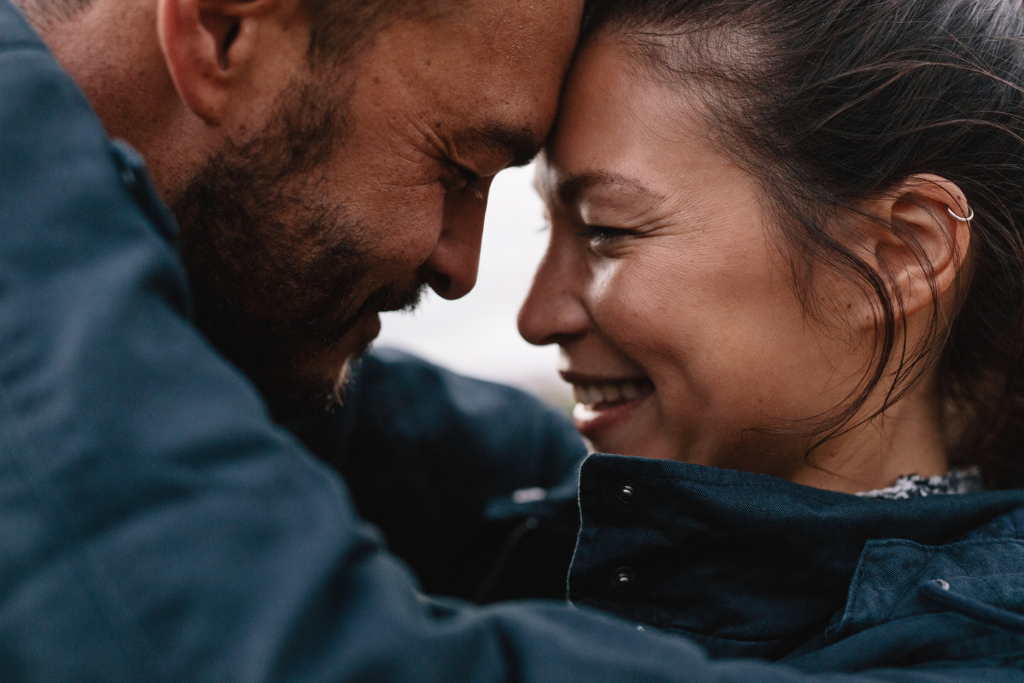
Healing rarely follows a straight path. There are often moments of clarity followed by periods where the pain feels just as strong again.
Over time, many people begin to notice subtle shifts. Thoughts become less intrusive. Emotional reactions feel more manageable. Conversations that once felt impossible start to feel more grounded.
Trust, if it is rebuilt, develops gradually through repeated experiences of consistency and care. Even when a relationship does not continue, many individuals find a renewed sense of stability within themselves.

It can be tempting to judge your reactions or compare them to how you think you should feel. But betrayal trauma is not a sign that something is wrong with you.
It is a response to something that disrupted your sense of safety in a profound way.
When you begin to understand it from that perspective, the experience often becomes less about self-criticism and more about care, patience, and giving yourself what you actually need.
If this feels heavier than you expected, that makes sense. This kind of pain doesn’t resolve on its own, and most people find they need more than time to get through it.
Therapy gives you a place to understand what you’re carrying and start building a way forward, at a pace that works for you.
At Palo Alto Therapy, we work with individuals and couples navigating infidelity and betrayal across Palo Alto, Menlo Park, and San Jose. If you’re ready to take that first step, we’re here to help you take it. If what you’ve read here resonates, you don’t have to figure out the next step alone. Our therapists work with couples and individuals navigating betrayal at every stage. Learn more about couples therapy at Palo Alto Therapy or call us at (650) 461-9026.